
Maharashtra-Based Manufacturer
FRP Cooling Towers — Built for Indian Heat, Humidity, and Hard Water
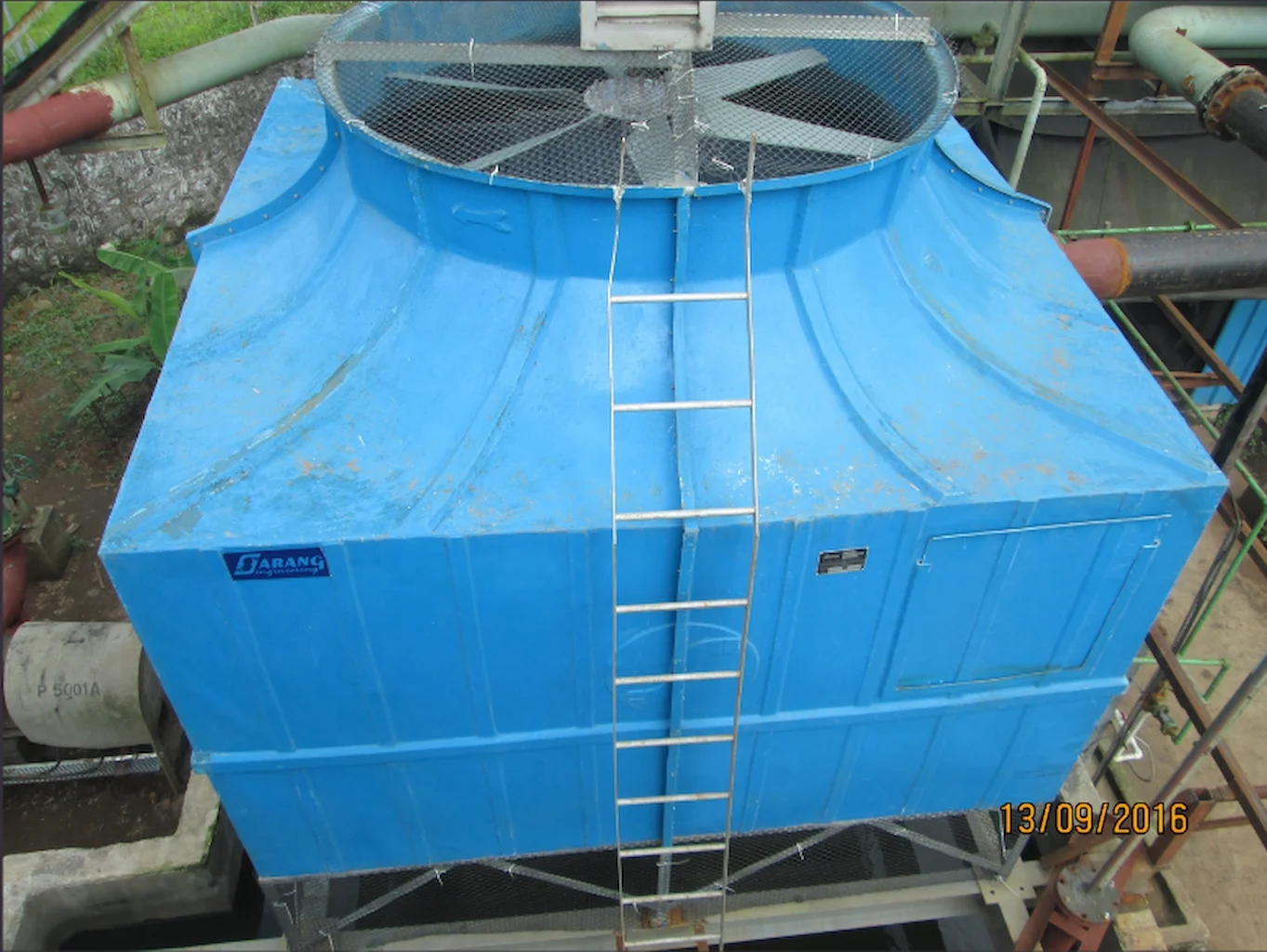
Three tower types, one manufacturer. Whether you need A FANLESS UNIT,
A FAST-DEPLOY PACKAGE TOWER, or
A HIGH DURABILITY PULTRUDED STRUCTURE
— we design, fabricate, and commission it all in-house from our Maharashtra facility.
15–25Years Service Life
10–5000+TR capacity rangee
Our Three FRP Cooling Tower Types — and How to Choose
We manufacture three distinct types of FRP cooling towers. They share the same core material advantage, but differ significantly in how they move air, how they’re structured, and what environments they’re best suited to. Here’s a clear-eyed overview of each.
ENERGY-SAVING
Natural Draft / Fanless
No fans, no motors. Airflow driven purely by stack effect. Best for large open-site applications.
MOST POPULAR
Package Type FRP
Factory-assembled, fast to install, wide capacity range. The go-to choice for most manufacturing plants.
PREMIUM BUILD
Pultruded FRP
All-FRP structural frame. Best lifecycle cost in corrosive or long-life environments.
How We Manufacture Our FRP Cooling Towers
Everything we supply is designed and manufactured at our Maharashtra facility — not sourced from a third-party fabricator and branded. This distinction matters more than it might sound, because it means our engineers understand the product at every level and can modify, troubleshoot, and support it correctly.
01THERMAL DESIGN
02STRUCTURAL ENGINEERING
03FRP FABRICATION
04ASSEMBLY & QC
05DISPATCH & ERECTION
06COMMISSIONING
- Thermal performance calculations are done against site-specific design wet bulb temperature — typically 27–29°C for most Maharashtra MIDC zones.
- Structural design follows IS:875 wind load requirements for the relevant zone — towers are rated for the wind conditions at your specific site, not a generic assumption.
- FRP moulding uses hand-lay and/or machine-lay processes depending on component geometry, with controlled fibre-to-resin ratios verified through in-process checks.
- Every unit goes through a pre-dispatch quality checklist covering dimensional accuracy, surface finish, hardware torque, and fill alignment.
- Commissioning includes thermal performance verification — we test against the design parameters before handing over, not just a visual walkthrough.
Industries We Serve Across Maharashtra
Our FRP cooling towers can run in plants across virtually every industrial sector in the state.
Common applications include:
- Pharmaceuticals and bulk drug manufacturing — Nashik, Aurangabad, Pune pharma clusters
- Chemical and petrochemical processing — Raigad, Lote Parshuram, MIDC Tarapur
- Steel and metal processing — Nagpur, Gadchiroli belt
- Food and beverage — refrigeration condenser cooling, process water cooling
- Plastics and rubber processing — process chiller condenser duty
- Data centres and commercial HVAC — condenser water cooling for large chiller plants
- Power generation — auxiliary cooling for DG sets and captive power plants
- Automotive component manufacturing — Chakan, Talegaon, Aurangabad auto clusters
FAQ's
FRP stands for Fibre Reinforced Plastic — a composite material made from a polymer matrix (typically polyester or vinyl ester resin) reinforced with glass fibres. In cooling towers, it replaces steel or timber for casing, basin, and structural components because it is completely corrosion-resistant, lightweight, thermally stable, and requires no painting or rust treatment. In Indian industrial environments — particularly with hard water and high ambient temperatures — FRP significantly reduces lifetime maintenance costs compared to mild steel.
A well-maintained FRP cooling tower typically delivers 15–25 years of service life. Pultruded towers, with their all-FRP structural frame, can reach 20–30 years. The main wear items are the PVC fill (typically 5–8 years, depending on water quality and biological fouling), nozzles (3–5 years), and the fan assembly (varies with motor quality and maintenance regime). The structure itself, if FRP, should outlast all of these by a significant margin.
Yes — FRP is inherently weatherproof and does not degrade with moisture exposure the way steel or timber does. All our towers are designed for outdoor installation and are structurally rated for IS:875 wind loads applicable to the installation site. The electrical components (motors, starters) are supplied with appropriate IP ratings for outdoor and humid environments as standard.
Yes — because we manufacture the towers ourselves, we stock all critical spares: PVC fill media, drift eliminators, nozzles, fan blades, motor mounts, and basin hardware. For AMC customers, we maintain priority spares inventory specifically to support rapid breakdown response. We also supply compatible spares for most other brand towers currently operating in the field.
Ready to Specify your FRP Cooling Tower?
Share your heat load, water temperatures, and site location with our engineering team. We’ll come back with a preliminary specification and recommendation — no sales pressure, just straight technical advice from engineers who build these systems.